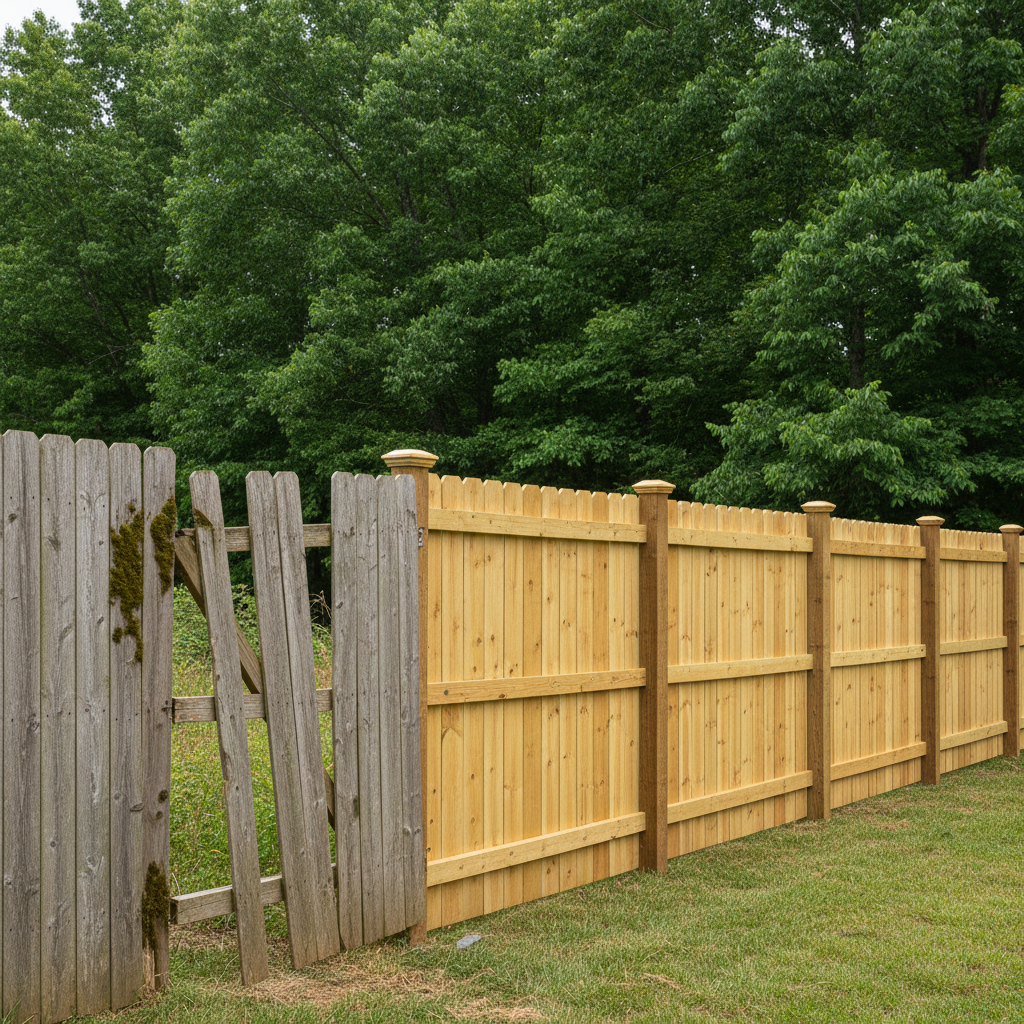
So, you're thinking about a new wood fence. Maybe you want some privacy for your backyard, or perhaps you're trying to keep those pesky critters out of your garden. Good choice! Wood fences look fantastic and really do add value to your property. But before you even pick out a style, there's a big decision we need to make about the posts themselves: are we going to bury them straight into the ground, or will we set them on concrete piers using metal brackets?
This isn't just some technical detail, you know. It's going to impact how much you pay, how long your fence actually lasts, and frankly, how much trouble it'll be down the road. I've seen plenty of fences come and go here in Sevierville, and I can tell you, the post foundation is usually the first thing to give out. Let's dig into the good and bad of each approach.
Direct Burial: Posts Straight in the Ground
This is probably what most folks picture when they think about putting up a fence. We dig a hole, drop the post in, fill it with concrete, and make sure it's perfectly straight. It's a classic method, and there's a reason for that.
The Good Stuff (Pros):
Cheaper Upfront: Generally, this is the less expensive way to start. You're not buying extra metal brackets or pouring separate concrete piers. It's a simpler process, meaning fewer labor hours and material costs.
Strong in the Right Soil: If your soil is good and stable – not too much water-holding clay, not too rocky – a well-set post can be incredibly sturdy. The concrete collar anchors it nicely, and the soil's weight helps too.
Looks Seamless: You won't see any hardware at the base of the post. Just wood coming right out of the ground. For some people, that's a cleaner, more traditional look.
The Not-So-Good Stuff (Cons):
Rot is the Enemy: This is the big problem, especially here in Sevierville. We get a lot of rain, and the ground stays damp. Even pressure-treated wood, designed to resist rot, will eventually give up when it's constantly exposed to moisture and soil. That concrete collar? It can actually trap water around the post base, which speeds up decay. I've seen posts rot out in 10-15 years, sometimes even faster if drainage is poor or the wood wasn't treated correctly.
Harder to Replace: When a post rots, you're stuck digging out a whole concrete-encased post. That's a lot of work, often requiring you to break up concrete, which is messy and takes time. You might even damage adjacent fence sections trying to get the old one out.
Frost Heave Risk: It's not as common as rot, but if the concrete isn't deep enough below the frost line (which can vary around here, especially up in higher elevations like the Wears Valley area), freezing and thawing cycles can push the posts up and down. Eventually, this loosens them or makes your fence uneven. What a pain!
Post-on-Bracket (Concrete Pier): Posts Off the Ground
With this method, we pour a concrete pier that actually sticks up above the ground. Then, we use a galvanized metal bracket to attach the wood post to the top of that pier. The wood never touches the soil.
The Good Stuff (Pros):
Superior Rot Protection: This is the main reason to choose this. By keeping the wood completely off the ground, you eliminate the primary cause of rot. The post base stays dry, extending your fence's life significantly. This is huge for longevity in our damp Tennessee climate, believe me.
Easier Post Replacement: If a post ever gets damaged – say, a car hits it or a tree limb falls – replacing it is much simpler. You just unbolt the old post from the bracket and bolt a new one on. No digging, no breaking concrete. Easy peasy.
Better Drainage: The concrete pier itself helps water drain away from the post base, stopping it from pooling against the wood.
Long-Term Value: Sure, the initial cost might be higher, but the extended lifespan and easier maintenance often mean you spend less over the fence's lifetime. You won't be replacing sections nearly as often.
The Not-So-Good Stuff (Cons):
Higher Upfront Cost: You're paying for extra materials (the brackets, more concrete for the piers) and the additional labor involved in setting the piers and then attaching the posts. It's a more involved process, no doubt.
Visible Hardware: The metal brackets are visible at the base of each post. Some folks don't mind this, but others prefer the clean look of direct burial. We can often use decorative post skirts to cover them up if you'd like.
Installation Complexity: It takes a bit more precision to get all the piers perfectly aligned and level before the posts go on. Definitely not a DIY job for the faint of heart.
My Recommendation for Sevierville Homeowners
Look, I'm all about giving you options, but if you ask me, for most folks in Sevierville, going with the post-on-bracket method with concrete piers is the smarter long-term investment for a wood fence.
Why? Our weather. We get plenty of rain, and the ground here, especially in those lower-lying areas or where you've got a lot of red clay, can stay wet for long stretches. That constant moisture is a death sentence for wood posts buried directly in the ground, even the best pressure-treated stuff. You're going to get rot, and you're going to be replacing posts sooner than you'd like, trust me.
Yes, it costs a little more upfront. I get that. But when you consider how much longer your fence will last – potentially doubling or tripling its life – and how much easier future repairs will be, that initial extra cost really pays for itself. You'll have a fence that stands strong and looks good for many, many years without the headache of constantly digging out rotten posts.
At Guardian Fencing, we always discuss both options, but we'll lean towards recommending the concrete pier method for wood fences because we want your fence to last. It's just a better way to build a wood fence that can handle what Tennessee throws at it.