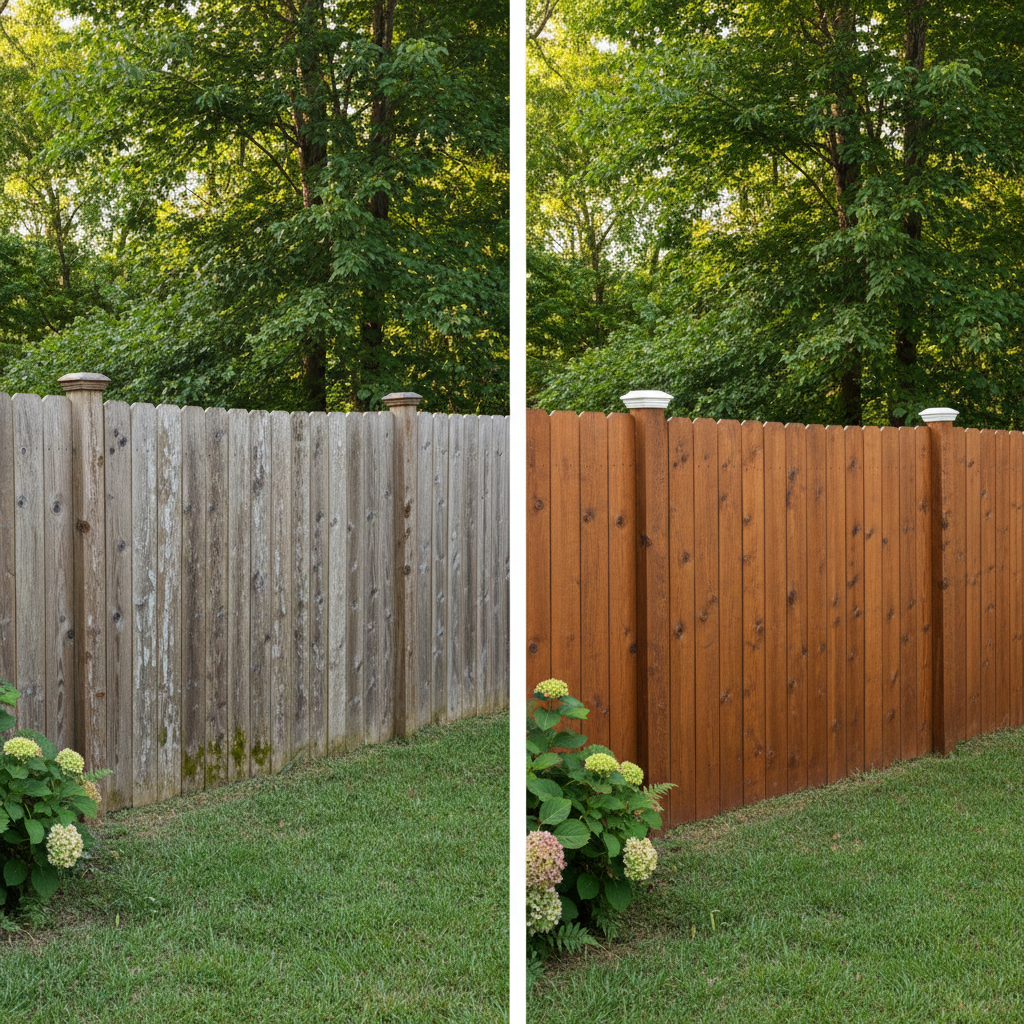
Alright, you've got a wood fence, or maybe you're just thinking about putting one in. Now you're probably wondering: should I stain it or paint it? That's a common question I hear from folks all over Sevierville, whether they're up in the hills near Pittman Center or down by the river. There's no single perfect answer, but I can definitely tell you what I've seen work best for fences around here.
Fence Staining: The Natural Look
Let's talk about staining first. When you stain a fence, you're not really covering the wood. Instead, the color soaks right into it. This means you still get to see the natural grain and texture of the wood, which a lot of people really appreciate. It gives your fence a more rustic, classic look, and that fits perfectly with the Smoky Mountain vibe we've got going on.
Pros of Staining:
- Natural Beauty: Like I mentioned, you can still see the wood. Staining just enhances what's already there.
- Easier Maintenance (Long-Term): When it's time to re-stain, you typically don't have to scrape off old layers. Usually, you just clean it up, maybe do a little light sanding, and then put on another coat. It fades over time, so you're not dealing with peeling paint, which is a big relief.
- Protection: Stains, especially good quality oil-based ones, get right into the wood. They offer protection against moisture, UV rays, and even mildew. This is super important in our humid Tennessee climate.
- Cost: Generally speaking, the materials for staining can be a bit more affordable than high-quality paints. Plus, the prep work is often less intensive.
Cons of Staining:
- Less Color Variety: You're mostly stuck with natural wood tones or semi-transparent colors. If you're dreaming of a bold blue or a crisp white, stain just isn't going to get you there.
- Shorter Lifespan (Appearance): While it protects the wood, the color itself might fade faster than paint. This is especially true for fences that get a lot of direct sun, like those facing south. You might need to reapply it every 3-5 years to keep it looking fresh.
Fence Painting: Bold & Protective
Now, painting is a whole different animal. When you paint a fence, you're putting a solid, opaque layer of color right on top of the wood. This completely changes the look, giving you a smooth, uniform finish.
Pros of Painting:
- Color Options Galore: If you can imagine a color, you can probably paint your fence that shade. Want to match your house trim? No problem. Looking for a bright pop of color? Go for it!
- Durability & Protection: A good quality exterior paint creates a thick barrier. This really protects the wood from the elements. It's like putting a shield on your fence, and it can truly extend the life of the wood underneath.
- Hides Imperfections: If your fence wood isn't perfect, or it's older and has some blemishes, paint will cover all that up, no questions asked.
Cons of Painting:
- More Intensive Prep: You can't just slap paint on, believe me. You've got to clean the fence thoroughly, sand it down, and often prime it. If there's old paint, you'll need to scrape and sand that off too. This is where a lot of folks get frustrated, and who could blame them?
- Higher Maintenance (When it Fails): When paint starts to fail, it peels, cracks, and chips. That looks terrible, and it means you'll have to do a lot of scraping, sanding, and priming before you can repaint. It's a much bigger job than re-staining.
- Hides Wood Grain: If you love the natural look of wood, painting just isn't for you.
- Cost: Good quality exterior paint can be pricier. And the labor involved in prep and application often adds to the overall cost, too.
My Recommendation for Sevierville Fences
Look, I've installed and maintained a lot of fences around here at Guardian Fencing. Given our weather – those hot, humid summers and the occasional freezing winter, plus all that sunshine – I usually lean towards staining for most wood fences.
Here's why: the way stain penetrates the wood offers excellent protection against moisture and UV without creating a surface layer that's going to peel and crack. When paint starts to fail in our climate, it really goes. You'll be spending a lot more time and effort scraping and sanding down the road. With a good quality semi-transparent or solid stain, you get great protection, a beautiful look that lets the wood show through, and easier maintenance down the line.
Now, if you absolutely need a specific, bold color to match your house or landscaping, then paint is your only option. Just be prepared for the extra prep work and the more involved maintenance when it's time for a refresh. But for most folks looking for good protection and a classic look that's easier to keep up with, staining is usually the smarter move for your Sevierville home.
Whatever you choose, make sure you're using quality products designed for exterior use and that you prepare the surface properly. That's half the battle right there, isn't it?